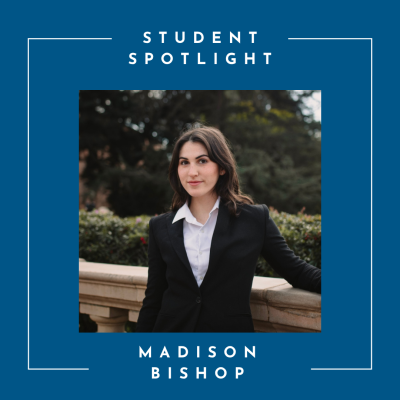

Student Spotlight – Madison Bishop

Meet UCLA undergraduate researcher Madison Bishop!

Madison majors in Psychology, minors in Applied Developmental Psychology, and is a part of the UCLA/Keck Humanistic Inquiry Undergraduate Research Awards program. Her project, “From Hearing to Understanding: How Parent’s Language Impacts Children’s Emotion Categorization,” aims to share information that will help families and early childcare centers better support children’s emotional and social-cognitive development.

How did you first get interested in your research project?

I first got interested in my project when exploring the difference between children’s emotion categorization abilities in the Language and Cognitive Development Lab. I was fascinated by what factors may have contributed to some children being better at categorizing different emotions such as happy, sad, and angry.

What has been the most exciting aspect of your research so far?

The most exciting aspect of my research so far has been the freedom of developing my own project. I have enjoyed setting a timeline and holding myself accountable.

What has surprised you about your research or the research process?

I have been most surprised by the amount of diverse research that is out there. It has been interesting to find several articles that support my hypothesis, but then also stumble upon one that completely contradictions it.

What is one piece of advice you have for other UCLA students thinking about doing research?

My biggest piece of advise I have for other UCLA students thinking about doing research is to reflect on what topics you find the most fascinating. Research is a very time-consuming and tedious process, so you want to make sure that what you are learning about excites you!

What effect do you hope your research has in your field, at UCLA, in your community, or in the world?

I hope my research will have a lasting positive impact on the field of developmental psychology. Through my project, I aim to share information that will help families and early childcare centers better support children’s emotional and social-cognitive development.

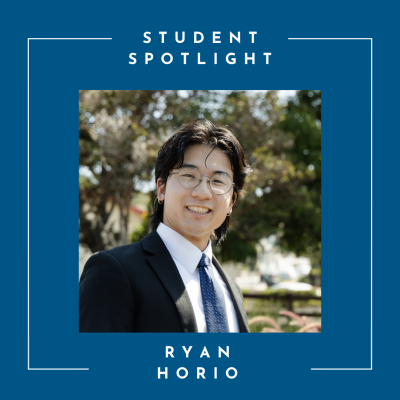
Headshot of an Asian American male college student, smiling, wearing a dark suit, wire rim glasses, and earrings, smiling, with greenery in the background

Student Spotlight – Ryan Horio

Meet UCLA undergraduate researcher Ryan Horio!

Ryan is double majoring in Human Biology & Society and Asian American Studies with a minor in Community Engagement & Social Change. He is part of the UCLA/Keck Humanistic Inquiry Undergraduate Research Awards program. The title of his project is “Fear, identity, and activism during COVID-19: Conceptualizing racialized Asian youths’ experiences of sinophobia and foreigner racialization in the US.” Through his project, he hopes to give his communities a voice and the courage to use it. Ryan’s best piece of advice is that anything can be research!

How did you first get interested in your research project?

During the pandemic, I witnessed people who looked like me being assaulted and discriminated against solely due to their perceived race. I felt helpless and unable to do anything at the time, and those feelings followed me to college where I pursued a second major in Asian American Studies. My academic journey combined with my passion for racial justice and activism led me to pursue an honors thesis and this research project.

What has been the most exciting aspect of your research so far?

Definitely speaking to my participants and listening to their stories! As my work seeks to place the experiences of anti-Asian hate during the pandemic within the broader context of sinophobia and foreigner racialization, these interviews are what keep me grounded in my work. It is a privilege to hear such powerful and intimate experiences.

What has surprised you about your research or the research process?

I did not realize how important research is for any kind of change. Furthermore, I believed research was something that remained in academia. However, discussing with other researchers and reflecting on my research’s purpose, I became surprised at how influential our voices can be if channeled together and done effectively. This experience has shaped my future goals within research and academia.

What is one piece of advice you have for other UCLA students thinking about doing research?

Anything can be research! So, you might as well do it on something that you are passionate about—think about the things that get you excited, the topics that you could talk endlessly on, the communities that motivate you to be here as a UCLA student. If you choose something that you are passionate about, you are already further than most others.

What effect do you hope your research has in your field, at UCLA, in your community, or in the world?

I hope that my research will give my communities a voice, as well as the courage to use it. Historically, we have been silent and have been silenced. In this light, I hope that our institutions listen to our stories as students and support us in the ways that we need them to. I also hope that my work empowers us to speak about our experiences instead of remaining silent. Finally, I hope that my research encourages others to think critically about their own research’s purpose and to keep action at the center of our work as academics.

You can follow Ryan on Instagram at @ryanhorio.

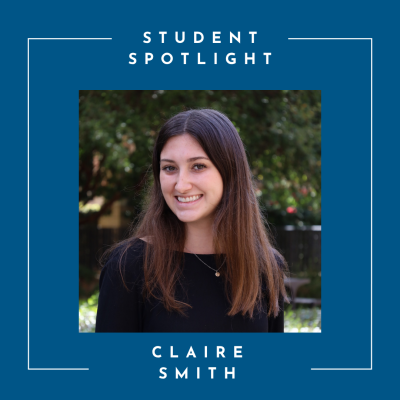
Student Spotlight – Claire Smith

Meet UCLA undergraduate researcher Claire Smith!

Claire is majoring in Human Biology and Society with a minor in Professional Writing. She is part of the Undergraduate Research Scholars Program.  The title of her project is “Evaluating the Efficacy of Mindfulness Self-Compassion Therapy in Mitigating Post Traumatic Stress Disorder Symptoms for Women Experiencing Homelessness with Substance Use Disorders.” Claire’s best piece of advice is to find a mentor whose work you really admire.

How did you first get interested in your research project?

I first became interested in community-engaged research through my work at the UCLA Mobile Clinic Project. This organization showed me firsthand the importance of using evidence-based, compassionate strategies. My work with MCP and Dr. Garfin’s REACH Lab have empowered me to continue advocating for resources and policies that support individuals experiencing housing insecurity.

What has been the most exciting aspect of your research so far?

The most exciting aspect of this research has been hearing feedback about the Mindfulness Self Compassion course. It’s wonderful to hear that some women feel it has really had a positive impact on their lives.

What is one piece of advice you have for other UCLA students thinking about doing research?

I would encourage students interested in beginning research to find a faculty or grad-student mentor whose work they admire. It can be really difficult to get started on your own, but having a mentor to guide you is incredibly helpful.

What effect do you hope your research has in your field, at UCLA, in your community, or in the world?

I hope that my research motivates funding bodies and community organizations to provide accessible and effective mental health programs to women recovering from trauma. As the literature surrounding housing insecurity and mental health therapies grows, I hope more people will prioritize trauma-informed care approaches for women experiencing housing insecurity.

You can follow Claire on Instagram at @cclairesmithh.


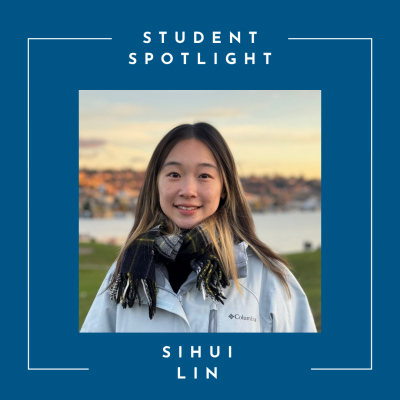
Young woman in a pale blue jacket, wearing a black and white scarf. Behind her is a landscape of grass, some water, and a village.

Student Spotlight – Sihui Lin

Meet UCLA undergraduate researcher Sihui Lin!

Sihui majors in Architectural Studies, Statistics and Data Science with a minor in Digital Humanities. She is a researcher in our Undergraduate Research Scholars Program (URSP)! Her research project is titled “From First to Fine: Facsimile, Fine Printing, and Cultural Patronage in William Andrews Clark Jr.’s Christmas Gift Books.”

How did you first get interested in your research project?

I first became interested in book studies through an English capstone seminar on libraries and special collections, where I had the opportunity to work directly with archival materials—from 17th-century booksellers’ catalogs to 20th-century fine printing masterpieces. I found it incredibly inspiring to explore UCLA’s vast library resources, which span diverse cultures and histories. While searching for compelling books to work on, I came across an article about the Clark Library’s history written by Lawrence Clark Powell, after whom Powell Library is named. The series of Christmas gift books published by William Andrews Clark, Jr. immediately caught my attention due to their distinctive format and cultural significance. I feel deeply grateful and honored to have the opportunity to explore UCLA’s own collections.

What has been the most exciting aspect of your research so far?

One of the most exciting parts of my research has been the opportunity to work directly with rare materials at the Clark Library and Library Special Collections. I am always captivated by the experience of handling fine printing books—turning pages made from handmade paper, noticing the intricate details of their craftsmanship, and spotting delicate watermarks that reflect the meticulous care put into their creation. It is a tangible connection to the past that feels almost magical. Beyond the materials themselves, the staff at both libraries have been incredibly supportive, sharing insights about their collections and helping me uncover hidden treasures.

What has surprised you about your research or the research process?

Working with archival materials has been full of surprises, and that’s part of what makes it so exciting for me. There’s something thrilling about diving into boxes of primary sources—whether it’s thank-you notes, newspaper clippings, or handwritten letters—without always knowing exactly where they will lead or what argument might emerge. Sometimes these materials align perfectly with secondary sources, but other times they challenge or even contradict existing narratives, which can completely reshape my understanding of the past. It is in those moments of discovery that I really feel the power of research—being able to piece together a more nuanced, comprehensive picture of history. It is surprising and unpredictable, but that is what keeps it so engaging.

What is one piece of advice you have for other UCLA students thinking about doing research?

I recommend exploring the excellent resources available at UCLA’s libraries! They offer extensive catalogs curated by experts across various fields. Plus, subject librarians are highly knowledgeable in their respective areas, so be sure to take advantage of their expertise!

What effect do you hope your research has in your field, at UCLA, in your community, or in the world?

Through my research, I hope to uncover the stories behind the treasures held in UCLA’s libraries and explore how private printing has shaped Los Angeles’s cultural landscape. While fine printing might seem like a niche field with little direct impact on daily life, it reveals fascinating narratives about cultural capital, craftsmanship, and the values of the past. By bringing these stories to light, I aim to help others appreciate the artistry and history behind these works—things that are often overlooked or taken for granted.